Goldmyer Hot Springs
Goldmyer Hot Springs is a gem of the wilderness found nestled in the foothills of the Cascade Mountains, roughly 25 miles east of North Bend, WA.
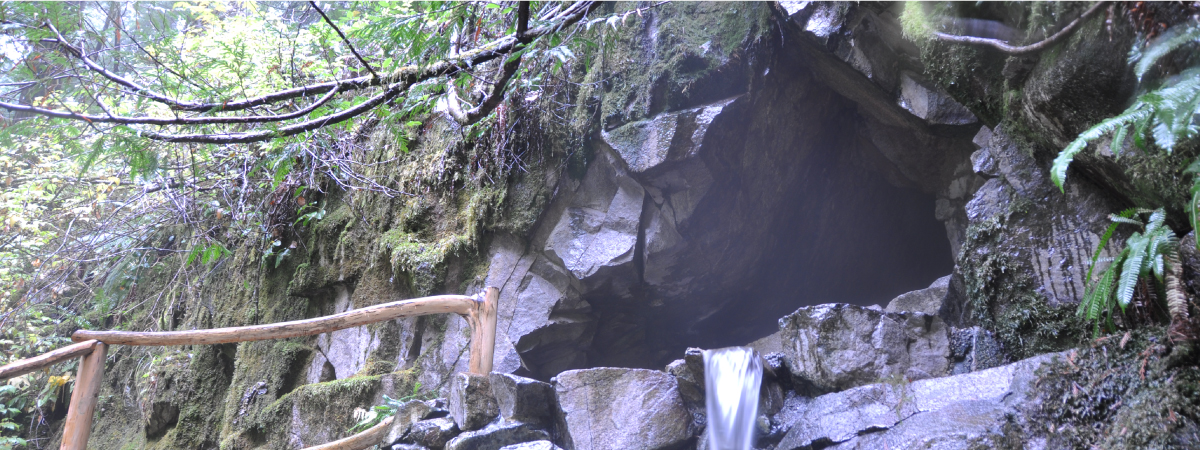
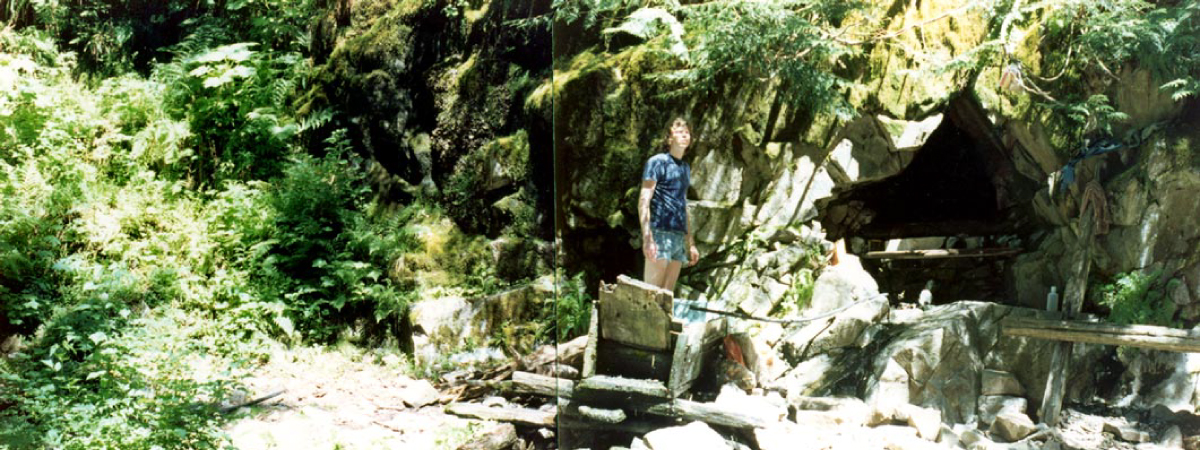
Goldmyer is a minimally developed wilderness area with a hot spring emerging from within a horizontal mine shaft created in the early 1900s. Water flows steadily from the source of the spring at 125ºF (52ºC), with the ambient temperature of the "cave" pool hovering around 111ºF (44ºC). This water cascades into nearby pools with progressively cooler temperatures, down to 104ºF (40ºC). A cold water pool is located adjacent to the hot spring pools for cool downs.
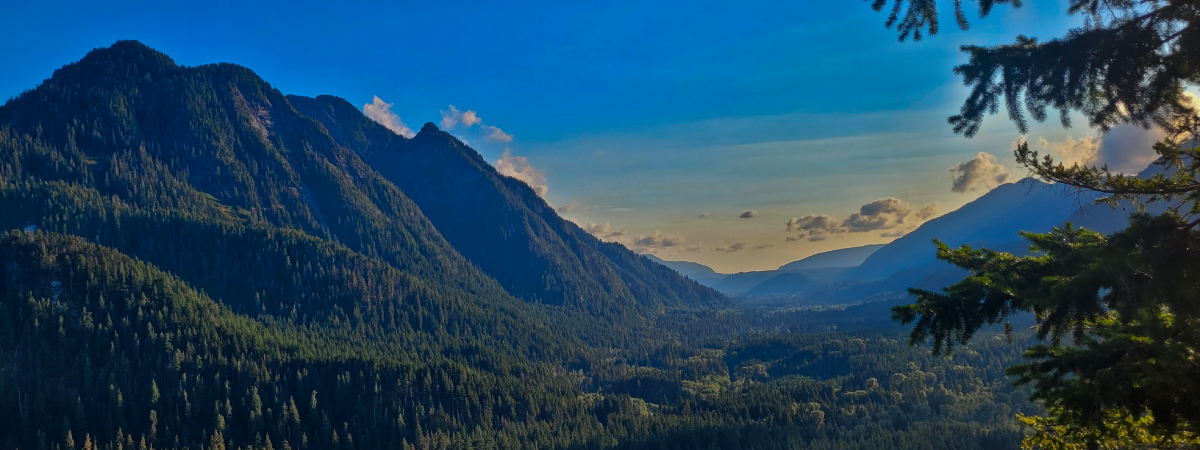
Goldmyer is located at approximately 1800-2000 feet elevation and is surrounded by ancient old-growth forests containing trees over 900 years old. Live-in Caretakers check in visitors, perform maintenance, and watch over the property. Access varies throughout the year according to weather conditions.
For anyone interested in exploring the upper Middle Fork River Valley, Goldmyer makes for an excellent base camp.
The natural geothermic hot water at Goldmyer carries a range of minerals, all in low amounts. The springs have moderately high pH of 9 (below 7 is alkaline, above 7 is basic). The springs have an earthy mineral fragrance, but no strong sulfur smell.
Chemical Composition (Parts Per Million)
Carbonate - 974.60
Chloride - 184.70
Sodium - 116.70
Silicon Dioxide (Silica) - 72.29
Hydrogen Carbonate - 59.45
Sulfate - 44.93
Bromine - 12.31
Calcium - 6.30
Hydrogen Sulfite - 3.71
Potassium - 2.875
Fluorine - 1.65
Boron - 0.655
Lithium - 0.134
Lithium - 0.134
Strontium - 0.088
Manganese - 0.080
Manganese - 0.080
Magnesium - 0.080
Arsenic - 0.017
Arsenic - 0.017
Aluminum - 0.015
Iron - 0.010
Barium - 0.001
Zinc - 0.001
Nitrooxidane - 0.00
Northwest Wilderness Programs
Goldmyer Hot Springs is owned and operated by Northwest Wilderness Programs, a Washington State nonprofit organization established in 1976.
Our goal is to offer wilderness experiences to the public while maintaining the long term preservation policies for the hot springs property and surrounding eco-system that have been in place for over 50 years. NWWP preserves the hot springs and surrounding ancient forest ecosystem for educational, spiritual, recreational, and research purposes.
Our restoration plan at Goldmyer includes letting the property heal itself by restricting access to the number of people who can visit the area per day. Major improvements in the health of this ancient forest became visible within the first 20 years due to restricted access coupled with environmental use policies aimed at promoting restoration. Help us preserve Goldmyer Hot Springs: leave only footprints, take away only memories.
All funds received are used to support NWWP's mission of balancing preservation with public access. The Board of Directors and work force of NWWP is completely made up of volunteers, with the exception of two office staff in Seattle and two property caretakers at the springs.
History
Indigenous History
Goldmyer Hot Springs acknowledges that we are gathered on the Indigenous Land of Coast Salish peoples who have reserved treaty rights to this land, specifically the sdukʷalbixʷ (Snoqualmie Tribe). We thank these caretakers of the land who have lived and continue to live here since time immemorial. You may learn more about the Snoqualmie Tribe and the Ancestral Lands Movement through the Snoqualmie Tribe Website, and the cək’ʷdup ʔə tiił sdukʷalbixʷ (Valley of the Snoqualmie) Map. Northwest Wilderness Program's founding principles strive to foster the Snoqualmie Tribe's traditions of stewardship into perpetuity.
While much of the springs' pre-colonial history has been lost, a conversation with a member of the Snoqualmie Tribe in the early 1990's suggests the indigenous people of this region knew of and visited the spring. The area would have been hard to reach and difficult to find. One can imagine it has been a sacred and special place to all who visit its source.
It is speculated that the hot spring has been flowing for thousands of years, seeping out of cracks in a cliff-side adjacent an alpine creek. The hot water starts as cold surface water, percolates down through the ground, and is heated by the temperature of the Earth's interior. Hydraulic pressure causes it to flow back up to the surface through cracks in the bedrock. The heat of the water causes it to pick up minerals from the rocks it passes by.
William Goldmyer
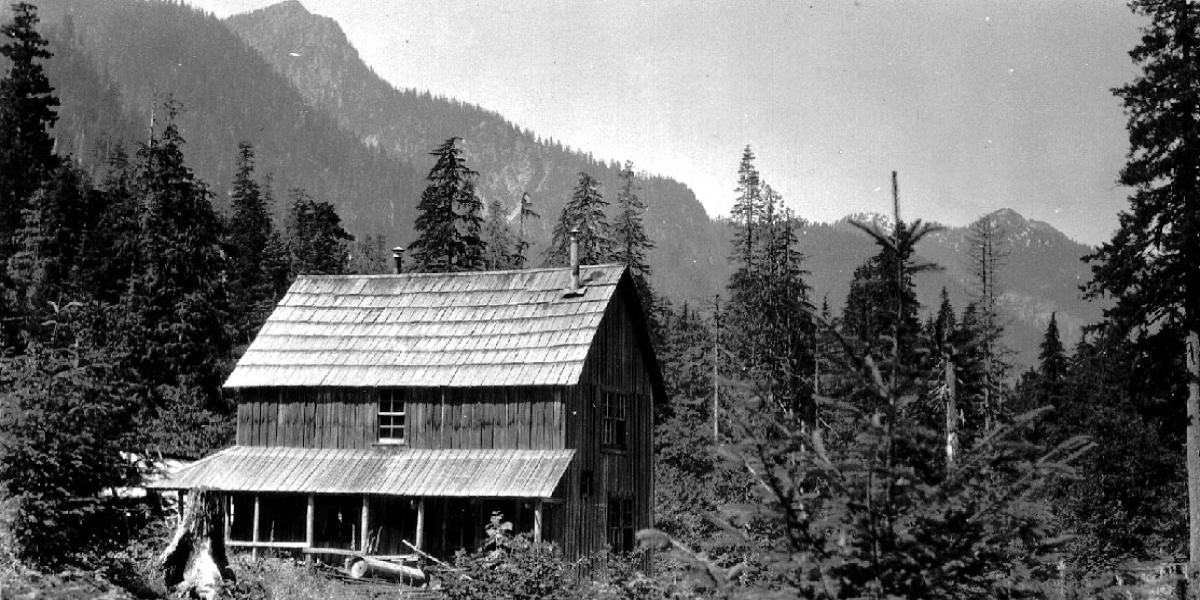
After hiking from California to Washington State, William Goldmyer (1843-1924) became the first European settler of what is now the Sand Point neighborhood of Seattle in 1868. What is known as Goldmyer Hot Springs today was developed by William as Crystal Hot Springs Resort in the early 1900's.
William staked a mining claim for the minerals in the hot water of the springs, built a lodge, and hosted miners and loggers in the Middle Fork valley in the early 1910's. Access at the time was by primitive road, trail or railroad, which followed the Middle Fork Trail and ended about a mile west of the property. There are records of a Model T bus outfitted with railroad wheels making the trip from Seattle in less time than it takes today.
Morrow Family
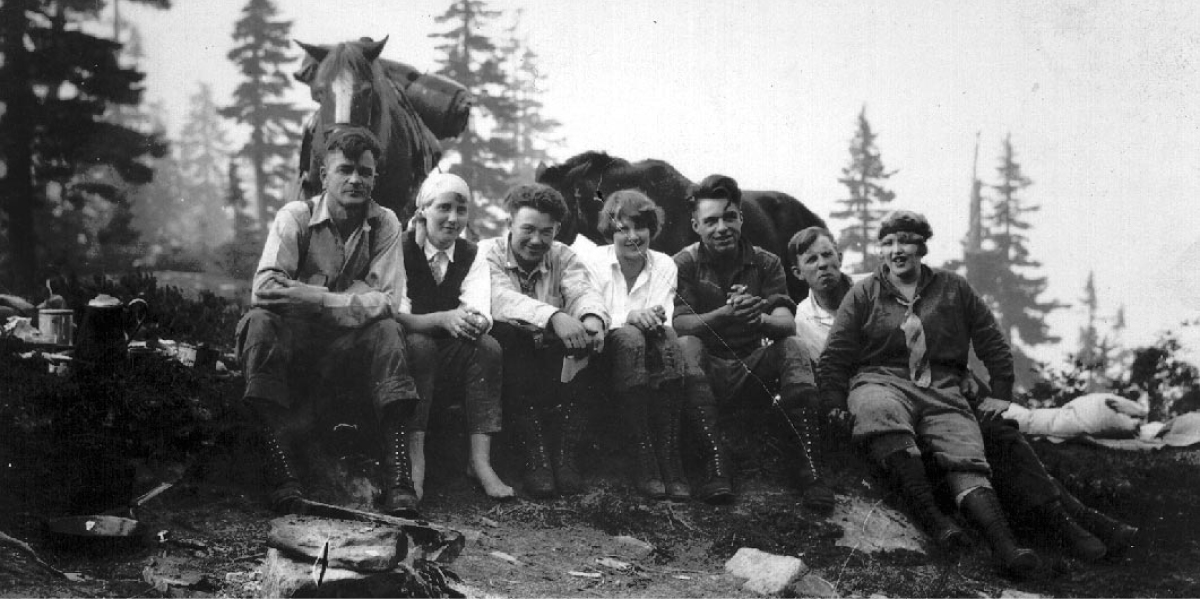
The springs area developed by William Goldmyer was located on land owned by the Northern Pacific Rail Road (predecessor of Burlington Northern Railroad). 20 acres surrounding the hot springs were acquired by the Morrow Family in 1928. Bill Morrow (1889-1962) had visions of eventually building a grand resort on the property with a sizeable hotel, bath houses, large swimming pool, and tennis courts.
In addition to maintaining Goldmyer's original lodge, 'Big' Bill expanded infrastructure by designing and building rustic bath houses, bridges, a hydro electric power system, sawmill, and plumbing systems for drinking and bathing water. Bill also expanded the lodge by building tent platform accommodations for his far ranging guests.
Work came to a halt with the arrival of World War II (1939-1945). Logging in the Middle Fork Valley stopped at Burnt Boot Creek as steel resources were moved away from railroads to the war effort. All hands went to support the war and dreams of a resort at Goldmyer were put on hold. Not many folks visited the springs at this time as it was slowly forgotten by all but a few.
Flooding and Overuse
In January of 1960 extreme flooding occurred in the middle fork valley, causing huge amounts of damage to the area's built infrastructure. Water sweeping down Burnt Boot Creek destroyed much of Bill Morrow's efforts including bath houses, footbridges, and the hydro electric power system.
Goldmyer was rediscovered after a 1966 Seattle Times photo article on the springs captured the attention of the Puget Sound region. In 1970 an extensive article in Seattle counter culture newspaper The Helix described it as a great place to gather and party. Although the Morrow family retained ownership of the property, unrestrained public access led to vandalism and destruction by thousands of careless visitors. Overuse of the property ultimately led to Goldmyer's original lodge being burned to the ground by squatters in 1972, forcing the Morrow family to rethink their relationship with the land.
Northwest Wilderness Programs
Bill's sister Veida Morrow (1902-1996) began exploring ways to preserve and protect the hot springs she fell in love with at an early age. Veida, John, and Josephine Morrow formed the nonprofit Northwest Wilderness Programs (NWWP) in 1976 in response to the abuse the springs had suffered during the 1960's and 1970's. The Morrow family donated the land to NWWP, which continues to manage the property today.
Northwest Wilderness Programs established minimum impact policies to allow the forest to begin the long process of healing itself. These policies continue to protect this treasure of the wilderness for the use of generations to come.
Extensive work by dedicated volunteers resurrected the land from the abuses of unrestricted access. Projects included the removal of massive amounts of garbage, extensive trail reconstruction, erosion control, pool reconstruction, and re-vegetation. Over 100 pounds of broken glass were removed from the springs area alone during clean up and reconstruction.
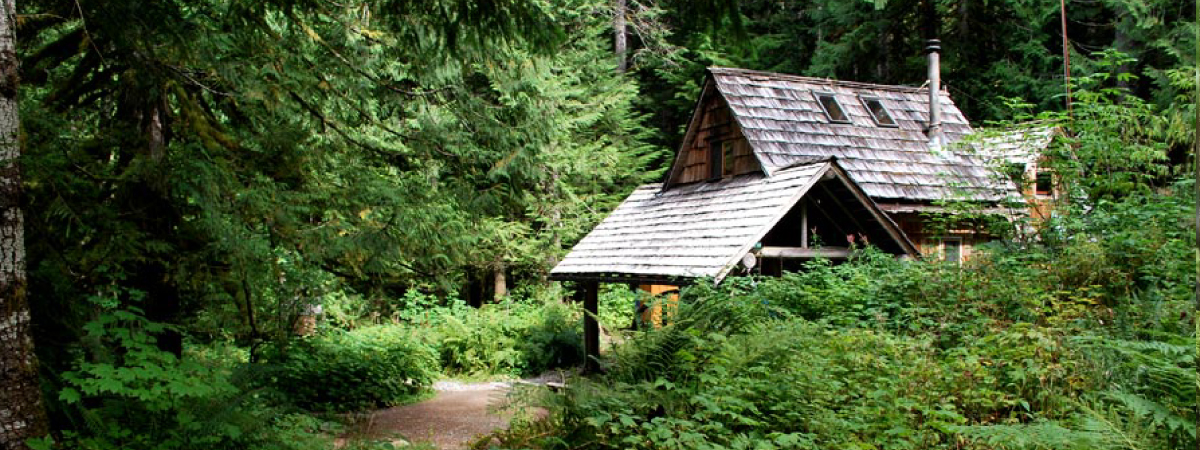
The current cabin was built by volunteers in the early 1980s to allow for full time resident caretakers to watch over the springs and 20 acre conservation area. Volunteers continue to maintain and update the area with facilities such as outhouses, campgrounds, and trails. In June 2007, the U.S. Forest Service installed a locked gate at the Dingford Creek trailhead, blocking the road to Goldmyer and increasing the hiking distance to 4.5 miles. A bridge across the Middle Fork River at the Goldmyer access point was completed at this same time, also by the USFS, eliminating the need for visitors to ford the river.
Ten miles of the typically pothole-filled road between Mailbox Peak and the Middle Fork Campgrounds was paved by the Federal Highways Administration to improve access to recreation areas for the growing population of the region. Access was restricted during road construction in the summers of 2014-2017, more information can be found in this Washington Trails Association article. NWWP has no control over road conditions.
The first Goldmyer.org website was launched in the late 1990's. It was modernized in 2013 to address increased visitation and interest in the springs. A lottery was implemented in response to overwhelming demand in 2020. Goldmyer.org was overhauled again in 2026 to offer online permits and streamline operations.
Caretakers have been recording weather date in journals since the 1980s, providing valuable information about the isolated micro-climate of the Middle Fork river valley. In 2019, a digital weather station was installed near the cabin to record detailed weather information and upload in real time for public viewing and analysis. To provide shelter from the frequently rainy weather of the valley, a covered picnic table was added in the clearing adjacent to the caretaker's cabin.
In the early years of NWWP, Veida shared her vision of preservation, encouraging and supporting volunteers who shared her love of Goldmyer. Thanks to Veida's forethought, vision and encouragement, Goldmyer is once again a beautiful, clean, safe place for people to enjoy the magic of the hot springs and surrounding old growth forest. NWWP celebrates 50 years of stewardship in 2026, and looks forward to many more!
Ecology
Old Growth Forest
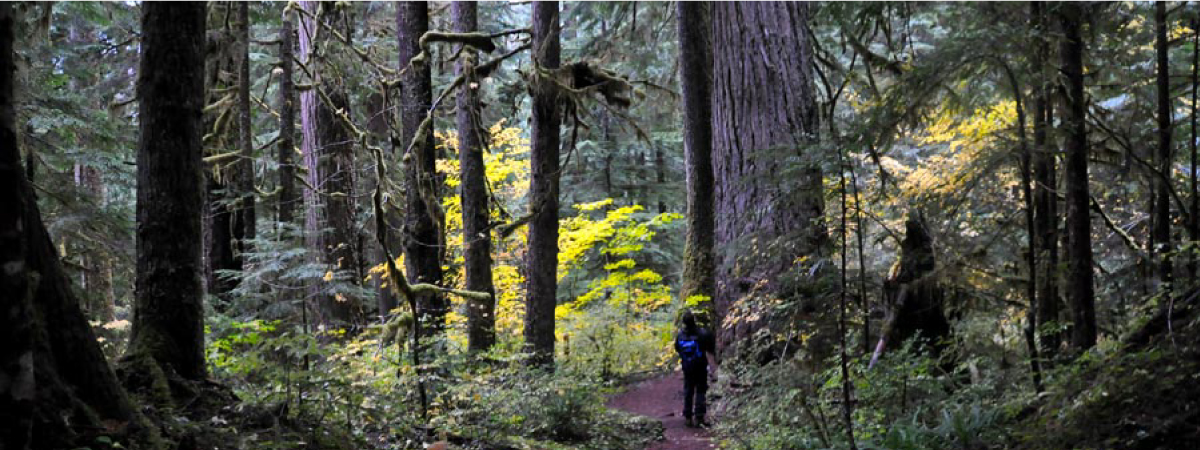
Goldmyer Hot Springs is located in one of the last remaining intact ancient forest ecosystems in North America. Goldmyer lies at 1800 to 2000 feet elevation on a north facing slope on the west side of the Cascade Mountains. While only 60 miles east of Seattle, Goldmyer receives over twice the amount of rainfall, placing it within range of being a temperate zone rainforest.
The upper Middle Fork Snoqualmie Valley that surrounds Goldmyer has never been commercially logged and is home to many species of plants and animals only found in rare old-growth forests. Huge fallen trees provide biomass for the forest floor and a growth medium for younger trees. Northwest ancient forests provide more biomass than even South American rain forests.
Plant Life
You will find a diverse forest full of multiple layers of habitat ranging from deep shade under the dense canopy of towering conifers, to small areas open to dabbled light by fallen trees, to rocky musical stream sides. The forest canopy is towered by up to 8-foot diameter 900 year old Pacific silver fir, Douglas fir, Western hemlock, Western red cedar, and the occasional Grand fir. The medium range habitat is filled by the rare Pacific yew, along with vine maple and alder in brighter areas.
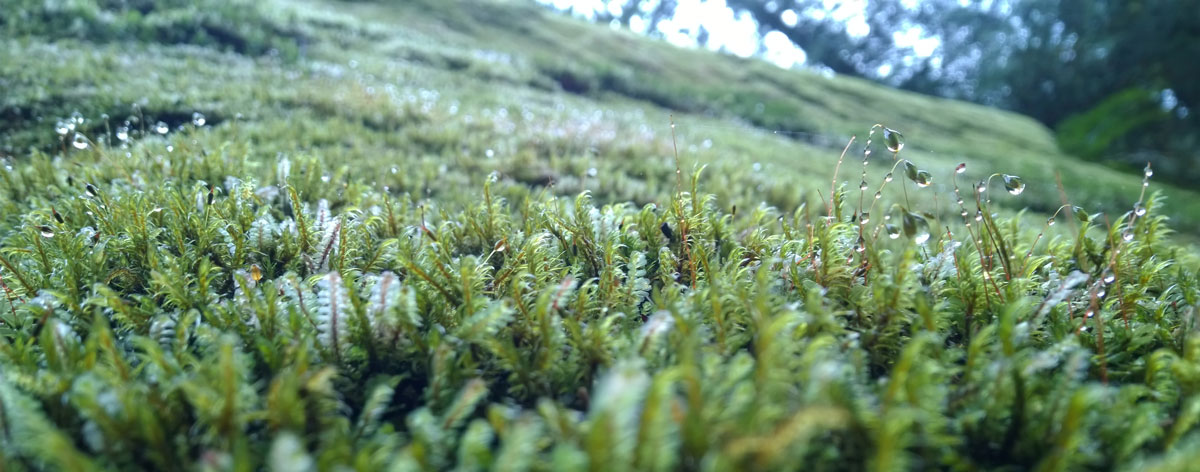
Varieties of berry producing bushes include salmonberry, thimbleberry, red and blue huckleberry, and Pacific trailing blackberry. The forest floor is home to various fern species including sword, deer, oak, and wood ferns, along with the rarer pyrolas, twin flower, rattlesnake orchid, queen's cup, dwarf bramble, tiger lilies, rein orchid, tway blades, twisted stalks, and many other species. Bizarre coral roots and ghost pipes that live in a symbiotic relationship with the living forest and produce no chlorophyll of their own. Many species of moss carpet the forest floor.
Wildlife
The forest is also home to many species of mammals, birds, insects, fungi, and amphibians including the rare pacific giant salamander. Garter and small rubber boa snakes can occasionally be seen crossing a path or curled up between rocks by the hot springs, neither is dangerous to humans. Douglas squirrels and chipmunks scurry up and down giant trees or run along tree freeways of fallen conifers, filling the forest with their chatter and whistles.
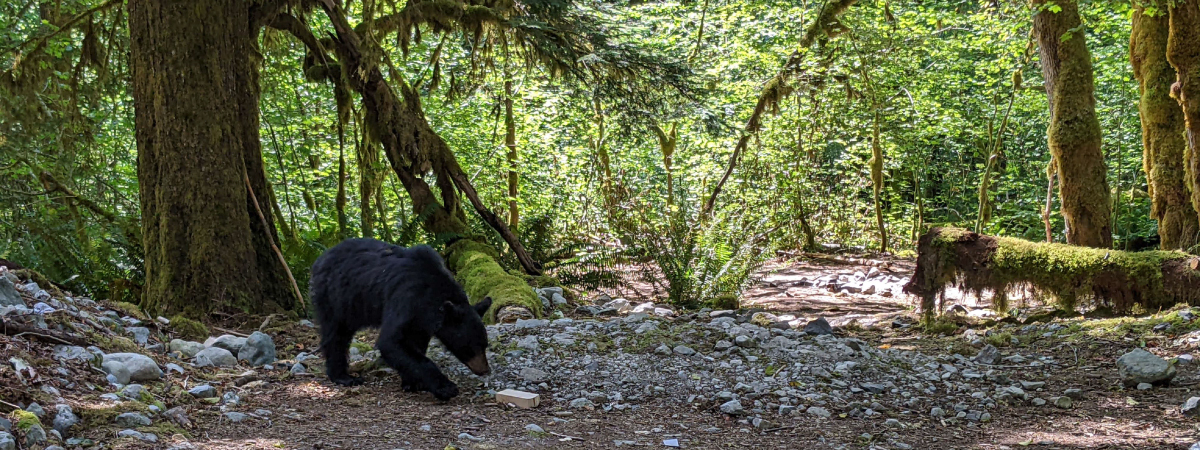
At night the flying squirrels come out, along with the owls. Black bear are common in the area, mostly seen along the hiking routes in late spring as they emerge from hibernation. Black bear are not particularly aggressive towards humans, but visitors should be aware and steer clear of them. Occasionally cougar or bobcat, usually the tail disappearing into the underbrush, is spotted or footprints seen in the snow.
Birds
Barred Owl
Calliope Humming Bird
Anna's Humming Bird
Oregon Dark-eye Junco
Thrush
Downy Woodpecker
Robin
Stellar Jay
American Dipper
Winter Wren
Nut Hatch
Mammals
Black Bear
Grey Wolf
Cougar
Bobcat
Mountain Goat
Mule Deer
Mountain Beaver
River Otter
Pine Marten
Hare
Chipmunk
Douglas Squirrel
Reptile + Amphibian
Pacific Rubber Boa
Pacific Giant Salamander
Pacific Giant Salamander
Northwest Garter Snake
Reg Legged Frog
Contact Us
Goldmyer Hot Springs is owned and operated by Northwest Wilderness Programs, a Washington State 501(c)3 nonprofit organization.
OFFICE
Northwest Wilderness Programs
PO Box 30655
Seattle, WA 98113
Northwest Wilderness Programs
PO Box 30655
Seattle, WA 98113
OFFICE HOURS
9:00am - 3:00pm (Monday - Friday)
9:00am - 3:00pm (Monday - Friday)
HOT SPRINGS
Middle Fork Snoqualmie River Valley
North Bend, WA 98045
Middle Fork Snoqualmie River Valley
North Bend, WA 98045
HOT SPRINGS HOURS
9:00am - 9:00pm (Every day)
9:00am - 9:00pm (Every day)
Goldmyer Hot Springs is owned and operated by Northwest Wilderness Programs, a Washington State 501(c)3 nonprofit organization.
Yes
No